


DIY Mediation for Workplace Conflict

Updated: Oct 16, 2025
Mediation by an external third party is often seen as a go-to solution for workplace disputes. However, in my experience, it’s not always the best approach. Workplace conflicts are rarely confined to just an interpersonal dispute. Bringing in a mediator to resolve one issue might address the symptoms, but it’s unlikely to transform the underlying conflict culture of an organization.
If you're an HR practitioner or People Leader seeking more support in managing workplace conflict, I have some exciting news for you here: Manage Workplace Disputes (shivmartin.com).

How can mediation be used for Workplace Conflict?
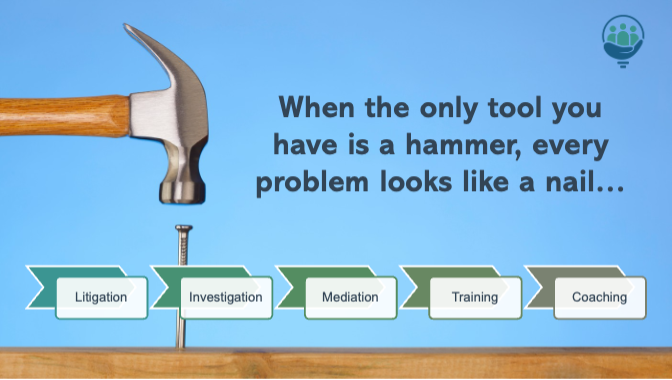
I suspect my views may be somewhat controversial, so let me clarify: mediation definitely has its place in resolving specific interpersonal disputes. But here’s the thing, wouldn't it be better if someone in-house could have facilitated this process earlier? Investing in coaching and empowering people leaders and HR practitioners to confidently navigate conflict is a far better strategy than relying on an external mediator, investigator, or legal adviser every time a dispute arises. This is precisely what I will be doing tomorrow!
A Better Approach: Empowering Leaders and HR Practitioners
Having worked closely with HR practitioners in mediation training workshops and ongoing conflict coaching discussions, I’m certain that empowering people managers through leadership training, coaching, and resourcing is a much better investment for organizations. It enables them to identify and manage disputes at early stages before they escalate into harder-to-resolve conflicts.
When called upon as a mediator in workplace disputes, I often encounter one or more of the following issues:
Lack of Understanding or Confidence: Leadership or HR practitioners may not fully grasp conflict management, turning mediation into a band-aid solution for a deeper issue.
Cultural Issues: A single mediation won't resolve ongoing cultural problems. Even if the mediation is successful, it’s often just a matter of time before the next conflict arises.
Role and Performance Clarity: Issues around an employee’s fit for their role, role clarity, and performance are better addressed in performance development discussions than in confidential mediation.
Escalated Conflicts: Poor or lacking communication earlier in the process can lead to conflicts escalating beyond the stage where mediation is useful.
Lack of Genuine Consent: Mediation requires the consent and willingness of the parties involved. If an employee feels coerced into participating, the process is fundamentally flawed.
The Business Case for Mediation: Is It Worth the Cost?
A mediation by an appropriately qualified, independent third party in Australia can cost anywhere between $2,500 and $5,000. There is no guarantee that mediation will resolve the dispute, and this uncertainty often makes it a risky bet for businesses.

Empowering In-House Conflict Resolution
I’m not suggesting that mediation isn’t useful, I’ve seen many successful outcomes in workplace disputes. But in my view, training, coaching, and empowering HR practitioners and people leaders with effective mediation and general conflict management skills is a far more powerful and effective option. My DIY mediation training and coaching courses for HR practitioners have been very well received because they equip participants with the skills to manage disputes in-house, informally, and discreetly at an early stage. From a cost-benefit perspective, it’s a no-brainer.
Case Study: Navigating Conflict in an Aged Care Home
Consider a fictional healthcare workplace grappling with ongoing conflicts between nursing staff and support workers. The disputes often revolved around the division of responsibilities and communication breakdowns, creating a tense working environment that affected both the quality of care and employee satisfaction.
Initially, the HR team sought external mediation, but the issues persisted. Realizing that a different approach was needed, they engaged in conflict management coaching that empowered them to handle disputes internally. They learned techniques for facilitating open dialogue, recognizing early signs of conflict, and implementing proactive communication strategies.
Over time, with these new skills, the workplace culture began to shift. The nursing staff and support workers developed a greater understanding of each other’s roles, leading to improved collaboration and a more positive atmosphere.
Q&A: Addressing Common Concerns
Q: Why might mediation by an external third party not always be effective?A: External mediation can be valuable in certain situations, but it often addresses only the immediate issues without tackling the underlying causes. In many workplaces, conflicts are tied to broader systemic challenges, such as role clarity and communication, which require ongoing attention. Empowering HR and leadership to handle these issues internally allows for more sustainable solutions.
Q: How can HR practitioners be better equipped to handle conflicts?A: Through tailored training and coaching, HR practitioners can develop the skills necessary to manage conflicts early on and influence people leaders to do the same.
Q: When might external mediation still be necessary?A: External mediation may be needed when a conflict has become deeply entrenched or when an unbiased third party is essential to the resolution process. However, these situations should be the exception, with most conflicts being managed through empowered, in-house approaches.
My DIY Mediation quick guide for workplace conflict provides HR Managers and workplace leaders with effective strategies, practical tools, and real-world case studies to build strong relationships and resolve disputes in the workplace. Download your FREE Guide here
Ready to strengthen conflict management in your workplace or organisation? Explore my mediation and training services, or book a complimentary confidential consultation with me today: Book Online

Shiv Martin is a nationally accredited mediator, practicing solicitor, conciliator, decision-maker, and certified vocational trainer. With extensive experience in complex dispute resolution, stakeholder engagement, and team building across business, community, and governmental sectors, Shiv brings over a decade of unique and diverse expertise in Law, Management, Vocational Education, and Mediation.
I’d love to stay connected 👉 Subscribe to my blog for more insights on workplace conflict management, conciliation, and leadership coaching.



.png)